Will My Heat Pump Work In Cold Weather?
Many people believe heat pumps don’t work – or work well – in cold weather.
Are they correct or mistaken?
If you’re considering heat pump installation, or already have one, you most likely want to know…
Read on to find out!
Do heat pumps work in cold temperatures?
Until recent years, it was fair to say that one disadvantage of heat pumps was their ability to work well in cold weather.
However, this is not an issue for most newer models, which are capable of functioning in up to -10℃ temperatures.
In fact, some even provide consistent heat in -25℃ temperatures.
Yes, they often need to work harder in extreme cold (which may increase their running costs), but that they can often still perform reliably.
Scandinavia shows the way!
Scandinavian countries are much colder than the UK.
However, Norway, Finland and Sweden have relatively high adoption rates – over 40 heat pumps per 100 households (Carbon Brief).
(We install the NIBE S2125 range, which is designed to thrive in Sweden’s cold temperatures.)
Similarly to the UK, Norway offers green energy grants to households that are willing to switch from fossil fuels to clean energy.
So, if heat pumps work in temperatures that regularly fall below freezing, the UK’s average winter temperature of 2-7℃ is no problem!
Cold weather impact on air source heat pumps
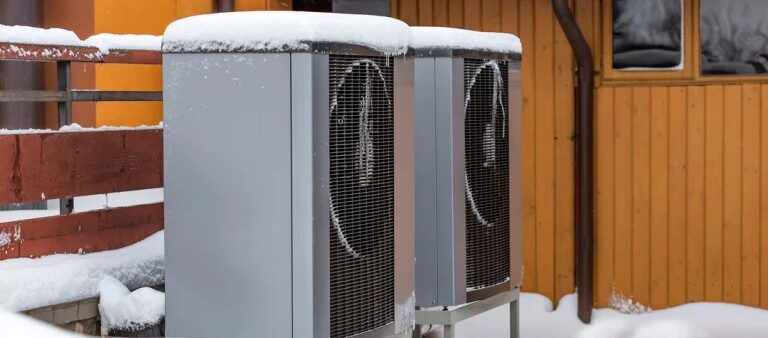
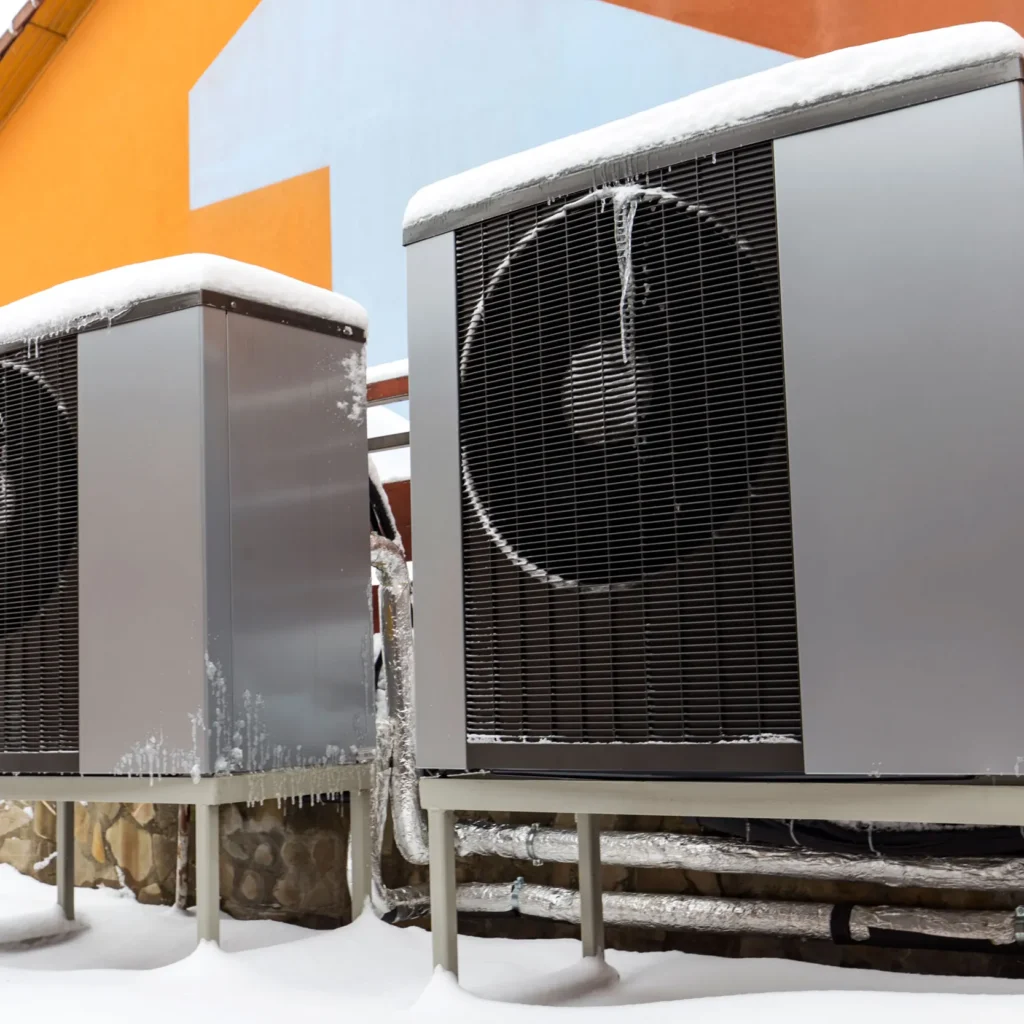
Air-source heat pumps work by collecting heat from the air, which means they’re exposed to the elements.
Most are highly durable and can last for years. But they must work harder in cold weather, as there’s less available heat.
The average air-source heat pump’s noise levels increase in the winter— with levels going up to 60 dB.
Investing in a high-quality heat pump is integral to ensuring it maintains performance. Older heat pumps can be noisy and prone to shutting down.
It’s also important to ensure that the optimal placement of the heat pump.
During heat pump installation process is followed, engineers will consider structural protection from the elements and acoustic factors.
What about ground-source heat pumps?
A ground-source heat pump can provide year-round consistency. However, they do require a large garden or vertical boreholes.
The earth’s internal temperature is always relatively stable. So, your ground-source pump won’t need to work harder to power your heating system.
The only issue you might have to consider is the relatively longer time it takes to install a heat pump in the ground during winter.
How heat pumps work
Fossil fuels continue to pose a significant environmental threat. And global usage of them has increased eightfold since 1950 (Our World In Data).
Older technology that relies on fossil fuels is still around for now. However, the energy landscape is changing. For example, oil boilers are being phased out.
Heat pumps are helping people reduce their carbon emissions and contribute to the environment.
- Collecting heat: Heat pumps collect heat from the air, ground or water, depending on your chosen type.
- Conversion: The heat pump contains refrigerant liquid that absorbs the heat and turns it into gas.
- Compression: Once the gas is created, a compressor increases its temperature for the delivery stage.
- Delivery: When the refrigerant gas reaches the right temperature, it passes through the heat exchanger, providing heating for your property.
Heat pumps can also support underfloor heating and radiators and generate hot water (if installed in a cylinder).
Top tips for maximising your heat pump’s performance
1. Ensure optimal airflow
Air-source heat pumps should never be covered, as you’ll need to ensure the air can circulate properly.
Limiting the airflow can damage the pump and prevent it from performing. There are also higher risks of mould growth, which can impact your property’s structural integrity.
A reputable installation service should find the best location for your pump, which won’t be restricted.
2. Insulation
Poor insulation is a common problem in properties across the UK. It results in excess heating bills as the property can’t prevent heat from escaping.
Heat pumps won’t perform as well in homes without insulation.
So, investing in insulation before installing a heat pump means it won’t have to work as hard as the building can retain heat.
3. Update the radiators
If your radiators are quite small, it might be worth Installing larger radiators.
They can heat rooms quickly and prevent your heat pump from working overtime.
Underfloor heating systems are popular for larger properties, as they disperse heat evenly throughout each room.
4. Remember maintenance
Most heat pumps are easy to manage but require regular maintenance.
Visual inspections are OK, but a professional service knows how to assess the pump’s components and will test it for issues.
It’s best to arrange your inspection before it gets colder so you’ll have time to fix any faults.
Watch out for the following issues during the winter:
- Ice Build-Up: Seeing snow on your pump is normal, but there should never be ice build-up on the exterior units.
- Rising Energy Bills: It’s natural for your energy bills to rise in the winter, but steep inclines could mean your heat pump can’t generate enough power.
- Cold Air: Heat pumps can heat and cool properties, but they should always provide hot air during the winter. Refrigerant leaks cause excess cold air.
The bottom line
There’s never been a better time to install a heat pump, and acting now means you can enjoy a warm winter.
The many grants available also mean you can save up to £7,500 when swapping your boiler for a heat pump.
Opting for a reputable heat pump provider gives you peace of mind that the pump will perform in cold weather and reduce energy bills.
If you’d like to explore heat pumps, we offer a full-service solution, from your initial consultation to installation and ongoing maintenance advice.
Feel free to get a quote today from Geowarmth.