Understanding Heat Pump Installation Timelines: What to Expect
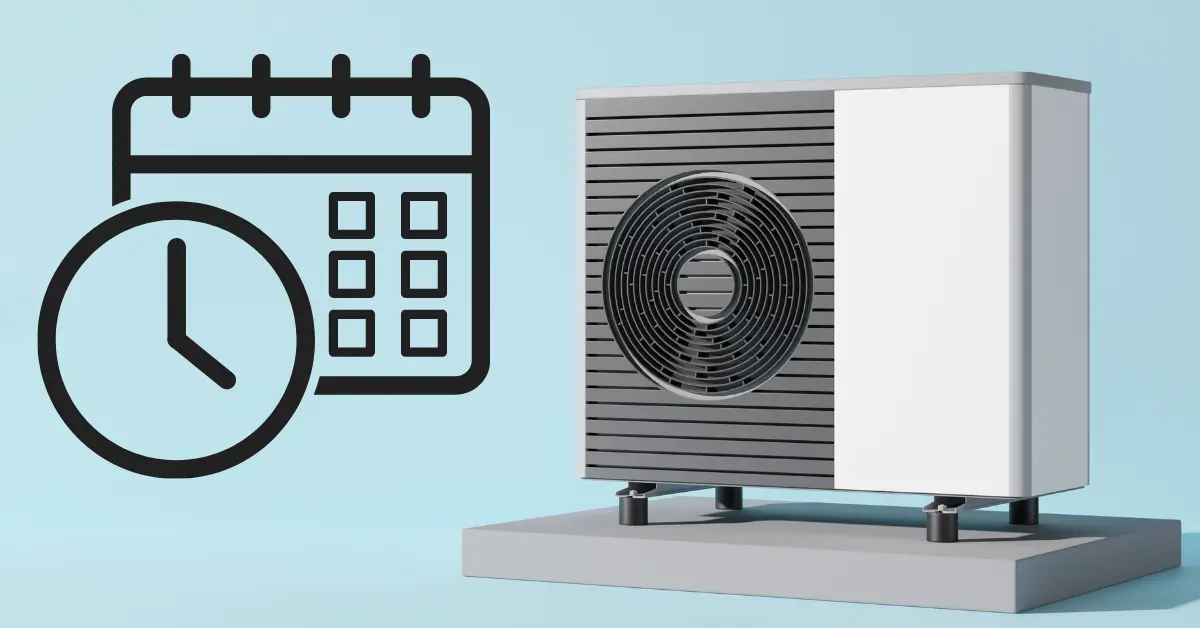
If you’re looking to install a heat pump, it’s important to know what to expect.
In this article, we’ll walk you through the entire heat pump installation process timeline, step-by-step.
Let’s get started!
Overview: Average timelines
On average, the heat pump installation process takes between 3 days and 3 weeks.
However, this figure isn’t that useful for most people because heat pump installation is unique.
In the best case scenarios, an experienced team can complete an installation in a day or two.
In the worst, installation complexities, one of the main disadvantages of heat pumps, can cause weeks of delays.
So, timelines depend on several factors.
Let’s explore what these are.
Factors impacting heat pump installation timelines
1. Heat pump type
There are a few different main types of heat pump systems. Each has its own unique advantages, disadvantages, and timelines for installations.
Below, we have listed them in order of average installation timeline length (from shortest to longest).
Air-source heat pumps: 1 – 2 days
Air-source heat pump installations are relatively quick and easy to prepare for and complete.
Engineers simply need to connect exterior and interior units to ensure the air-source heat pump can heat or cool the property.
It’s worth noting that smaller properties with limited space require more planning. After all, installing them in some locations can cause obstructions.
Water-source heat pumps: 1 – 2 weeks
If you have direct access to any of the following, you can use their consistent temperatures to collect heat and turn it into energy:
- A lake
- A large pond
- A river.
As these sources aren’t often highly accessible, water-source heat pumps are less popular than other solutions.
Installations involve digging trenches and using lake collectors (pipes submerged in lakebeds). The time this takes in part depends on how close the water source is to the property.
Ground-source heat pumps: Up to 3 weeks
Opting for a ground-source heat pump is a wise investment. It is the cheapest running costs of heat pumps, generates the most consistent power, and is the most reliable.
Unfortunately, you’ll either need a large garden to accommodate a horizontal ground-source pump system or have the money to install vertical boreholes.
The installation service will need to prepare the site by digging into the ground and laying pipework. So, the process takes much longer than installing an air-source heat pump.
2. Planning
Most UK properties can accommodate heat pumps. But the installation service will visit you on-site to review which type of pump is suitable and other details.
For example, smaller properties can pose some issues as there’s less exterior space. And installers need to consider how placement can have an impact on the noise a heat pump creates.
In general, the final timeline will be based on:
- Property type: Heat pumps must meet the Permitted Development criteria, including not obstructing or disrupting neighbours. Your installation team will isolate the best location, but this can take longer with conservation properties.
- Fossil fuel systems: You’ll need to remove your fossil fuel system before installing a heat pump. Removing boilers without professional knowledge can be dangerous, so it’s best to let the technicians handle it.
- Insulation: The main drawback of heat pumps is that they don’t perform well in properties without insulation. If your building struggles to retain heat, the service might recommend insulating it before installing a heat pump.
If your property has adequate space and is well insulated, the assessment and planning stage might take a day. For buildings that require extensive preparation, it can take a few weeks to reach the installation stage.
Site preparation
Properties with old heating systems often need more preparation to accommodate heat pumps. Homes without much space are also harder to work with.
For example, ground-source heat pumps often require extensive site preparation, including digging horizontal trenches.
Vertical systems take even longer. But they can be worth the extra work if your main priority is installing a heat pump that offers year-round consistency.
3. Weather conditions
A reputable heat pump installation service can install heat pumps in all conditions, but ground-source pumps are easiest to install in the spring and summer.
Whilst good heat pumps work well in cold weather, installation is a different matter. The ground is harder in colder temperatures, making digging very difficult.
If you’re willing to wait for optimal conditions, you’ll pay less for labour and won’t need to worry about freezing pipes.
4. Planning permission
The majority of heat pumps fall under permitted development, which means you won’t need planning permission. But there are some exceptions, such as:
- Listed buildings
- Properties in conservation areas.
Some restrictions have been lifted to accommodate renewable energy installations. But you might still need to apply for planning permission, which can take a few weeks.
Your installation team will assess the property and advise on whether you’ll need to apply for permission.
5. Availability
When installing a heat pump, the golden rule is to use an MCS-certified service.
Companies experienced with fossil fuel systems don’t necassarily have the skills and knowledge for heat pumps.
Check whether the company has relevant certifications and experience with renewable energy installations.
Conclusion
Heat pump installations can take anywhere from a few days to a few weeks.
Generally speaking, air-source heat pumps installations are the fastest and easiest to install.
By contrast, water and ground-source heat pumps require more planning and preparation and so take longer.
Installation timelines are important, but there are other things to consider. For example, which type will save you more money in the long run?
If you’re ready to invest in a heat pump, Geowarmth can help. We offer planning, preparation, installation services, and maintenance advice.
Get a free quote today.